Tech, Tips, and Tutorials.
Reviews, News, and Rants.

Primes vs. Zooms

3 Lenses

Do you prefer to get the right focal length with a zoom, or do you think in one format like a prime? Everyone's different. I'm a prime person, but I also appreciate a good zoom when I see one.

Last Updated: 18 Feb 08 (v3)

What's a prime?

A lens with only one focal length. This means that it will not be able to zoom in and out, i.e. your shooting is limited, to a certain extent. Also known as fixed-focals.

So what should you buy? A prime or a zoom? Well first you need to know what's your preference.

Take the test to find out

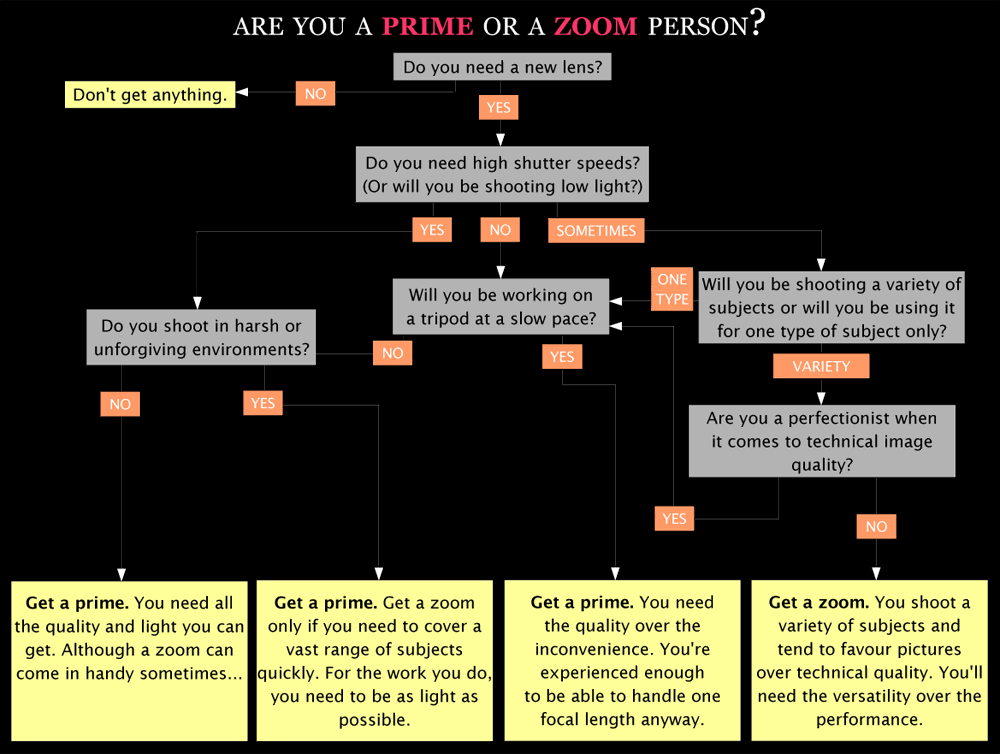
I've written a mini questionnaire that will hopefully get you closer to an answer. Taking it will help you find out which kind of person you are. Take your time, and think about each question and how it applies to you. If need be re-take it to see if you arrive to the same answer.

2 ways to download the test:
You can download and take the test in either GIF or PDF format. I recommend the PDF version.

Download links

  • GIF version
  • PDF version (link 1) (link 2)
    (note: try the first link, if it doesn't work then try the second link)
    Test Preview


    Below are advantages of going with primes or zooms. In the end it's your choice as to which you prefer.

    Advantages of primes

    - Smaller and lighter than equivalent zooms, with all other factors being equal. This is because you don't need a lot of glass to build primes. E.g. a 400mm f/5.6 prime is much lighter than a 200-400 f/5.6 zoom.

    - Primes are much sharper, especially wide open and at the corners. Because of their simpler optical formula, these lenses perform much better than zooms wide open. A zoom lens needs stopping down to get acceptable quality. You won't gain too much sharpness by stopping down a prime.

    - Almost always faster. This is probably the most appealing point. This allows more background blur and higher shutter speeds (or lower ISOs). In order to get their EF 70-200 f/2.8 IS to match their EF 200 f/2 IS, Canon would need to make it 2x the size and 2x the cost of the current version, and it STILL wouldn't be as sharp. This is simple maths.

    Advantages of zooms

    - More convenient and versatile. This is the biggest reason why zooms are more popular. People care more about being able to set a precise focal length. They don't like being limited to one focal length

    - Fewer lenses needed to cover the same focal lengths (however each one is larger, heavier, and less sharp).

    And another thing...

    I personally prefer primes for the normal range, around 18-150mm. They're more portable and offer better quality. However I like the convenience that my 18-55 offers, provided I'm willing to live with the compromises involved.

    One last point, primes have their own "character". Because of the fact that they have a simpler optical design, primes can get their own optical character. My Nikkor 50mm f/1.4 AI-S (look out for an upcoming review) has a slightly warm touch to its images and a crispness to its images. This crispness stems from the fact that the few glass elements used in the construction allow for higher image contrast. Zooms have a lot of glass inside them. When light enters the lens it will have more pieces of glass to bounce against, thus inevitably reducing contrast.

    Further reading

Continue Reading

Nikon digital SLR family

Last Updated: 17 Jan 08 (v2)

Nikon have a total of 6 digital SLRs in production today.


Consumer


  • Nikon D40
    6 MP DX sensor (announced November 2006)

    Nikon's lowest-end digital SLR. Aimed at either the absolute beginner; those moving up from a point-and-shoot; or those looking for a low-cost gateway to the Nikon system. Famous for: price and image quality. Infamous for: supporting auto focus only on AF-S/AF-I lenses. Having 'only' 6 megapixels. The Nikon D40 replaced the Nikon D50.

  • Nikon D40x
    10 MP DX sensor (announced March 2007)

    A 'big-brother' to the Nikon D40. The biggest difference is that this has 10 megapixels (4 more over the D40). It is primarily intended to provide competition to the Canon EOS 400D in the crowded 10 MP entry-level market. Famous for: Having the same image quality as the excellent D40. Infamous for: auto focus with AF-S/AF-I lenses only. The Nikon D40x has no predecessor. It doesn't replace the Nikon D40 or D50.

  • Nikon D80
    10 MP DX sensor (announced August 2006)

    Nikon's feature-full intermediate camera. Priced above the D40/x line and offers more features, including autofocus with older AF lenses. Famous for: Image quality, features. Infamous for: Often flawed Matrix Metering. The Nikon D80 replaces the Nikon D70s.


    Professional


  • Nikon D200
    10 MP DX sensor (announced November 2005)

    Offering a robust magnesium body and superb ergonomics in a compact body, the Nikon D200 is a camera mainly aimed at professionals looking for a backup body, and amateurs/enthusiasts looking for premium performance. Famous for: build quality, features, performance. Infamous for: Noisy high ISO. The Nikon D200 was a huge upgrade over the aged Nikon D100. Note: the new D300 has NOT replaced the D200. D200's are still being produced today.

  • Nikon D300
    12 MP DX sensor (announced August 2007)

    The Nikon D300 is a semi-professional camera. It has a lot in common with the much larger, professional level D3. Its main features are: a weather-sealed magnesium body; 6 fps (expandable to 8 fps with battery grip); 14-bit image processing (shared with D3); professional 51-point AF (shared with D3); 922k-pixel 3" LCD screen (shared with D3); Live View with Contrast-Detect AF (shared with D3); and a dust shaker. Famous for: professional features, value for money. Infamous for: Some early adopters are reporting faulty metering, these were replaced under warranty. The Nikon D300 doesn't replace the D200 according to Nikon literature.


  • Nikon D3
    12 MP FX sensor (announced August 2007)

    The Nikon D3 is a professional camera. It offers plenty of professional-level features and many firsts for Nikon. Most notably, it is the first Nikon to have a full-frame 35mm sensor (coined FX-format). It offers: an unprecedented 9 fps; 51-point advanced AF system; 14-bit image processing; 5.1 MP DX crop mode; 922k-pixel 3" LCD screen; Live View with Contrast-Detect AF; and a robust, fully weather-sealed body. Famous for: FX format sensor, image quality sets new standards. Infamous for: Nothing, except that the high price tag puts it out of the reach of many. The Nikon D3 seems to have replaced the D2Hs. But because it has no 'H' suffix, it is suggested that it also replaced the D2Xs. However, rumours of a high-resolution D3X have been circulating for months.

  • Continue Reading

    Why I didn't go for the Nikon D40x

    No image? Click here to attempt opening it in a new window The Nikon D40x was a camera that was released four months after the original D40. It was built so that those that felt that they need more than 6 MP will have the camera they want. It is priced to be in direct competition with Canon's EOS 400D. It wasn't intended to be a replacement model, just a “big brother” version of the D40.
    Note: This isn't an article written to justify my purchase. Read the post's title. It's an article about why I didn't buy the D40x instead.

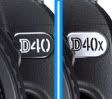
    Besides a few internal differences, the D40x is identical to the D40. It uses the exact same body, the same screen, the same menus and interface, and all the things which made the D40 such a great camera. In fact the only external difference is the badge.

    Below are the most significant differences between the two: - 10 megapixel CCD sensor (D40 has 6 MP)
    - 3fps (D40 shoots at 2.5fps)
    - Lowest ISO of 100 (D40's lowest is ISO 200)
    - Lm100 (€235 or £160) more expensive
    - Flash x-sync: The D40 is one of the few dSLRs that can sync the flash right up to 1/500. The D40x, D80 and higher can only sync up to 1/200.
    - Slightly noisier shutter. Above 1/100 the D40 uses a silent electronic shutter, while the D40x uses a mechanical shutter right till 1/4000. This is the reason for the D40's higher x-sync speed.

    One of the reasons that I like the Nikon D40 is because it has a relatively low pixel count. More megapixels mean worse image quality, given the same sensor size and tech. Anyway, 4 more MP isn't that big a deal. While 10 MP sounds like almost double 6 MP, in fact it isn't. It is only a 22% increase. In order to double the resolution of 6 MP, you would need a 24 MP camera.

    Having more MP is a good idea if you plan on making huge prints and viewing them with your nose touching the print. 6 MP is more than enough to print beautifully up to A3 size, and even A2 with some work. Who prints that big anyway? Not the average D40(x) user anyway.

    Shooting at 3 fps compared to 2.5 fps is a non-issue. 0.5fps will not make a big difference. Get yourself a 9/11fps Nikon D3 if you're serious about continuous shooting(RRP Lm5,000).

    Going down to ISO 100 would have been very important if it was a compact camera (they suck at anything above ISO 100), but the D40's ISO performance is so good, you won't miss ISO 100.

    All in all, the D40x just wasn't worth the Lm100 premium for me.

    Continue Reading

    Sony N1: Overview

    I have a Sony N1, and have published an extensive review.

    Go to the review now

    The Sony Cyber-shot DSC-N1 has been replaced by the 10-megapixel N2. Besides the megapixel difference, the two cameras are almost identical. The N1 is still a good camera, and should still be available in some stores.

    No image? Click here

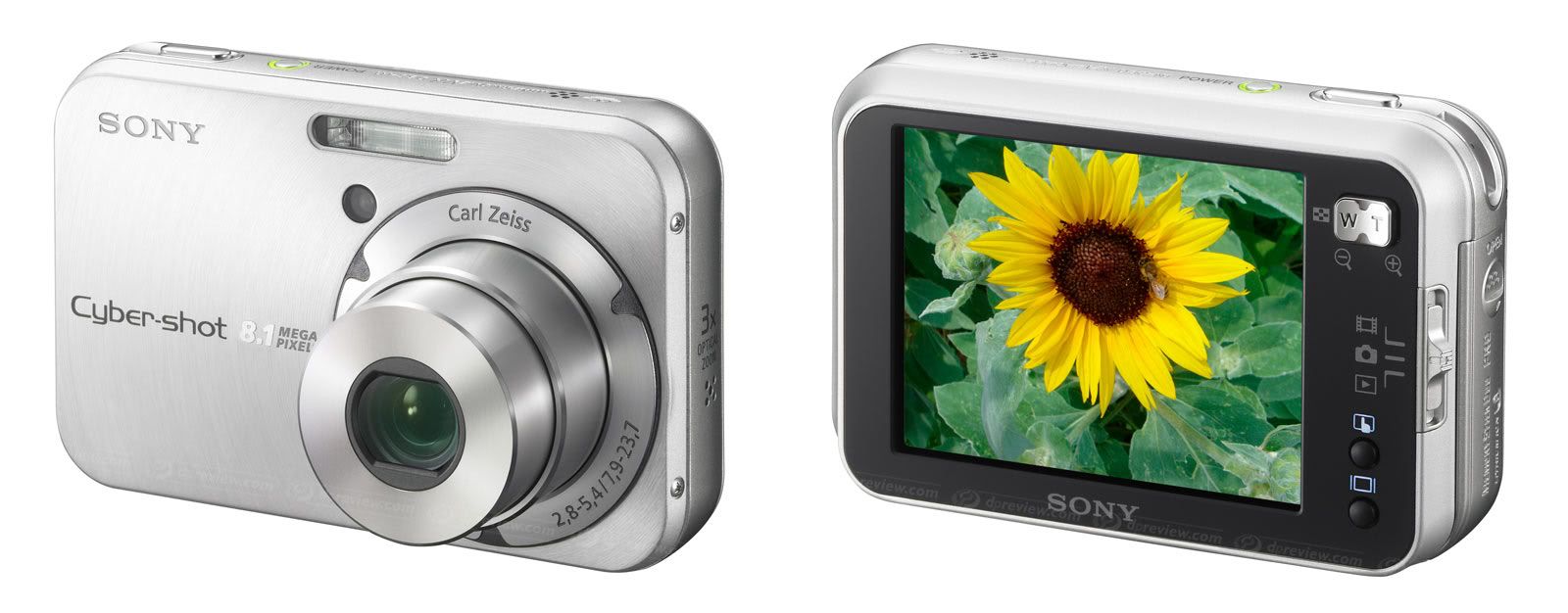
    Back in October 2005, Sony announced a new range a ultra-compact digital cameras: the N-series. Their first model was the compact and unique 8 megapixel Cyber-shot DSC-N1. It has a rather high price tag, and so the camera was aimed mostly above budget-level, for non-photographers who want great pictures and be able to show them off with everyone. The N-series slots in nicely above the ultra-compact T-series yet below the bridge-type H-series cameras from Sony.

    This type of camera was designed with the consumer in mind. It has a large, bright, wide viewing angle, high resolution screen. Just perfect for showing off the pictures and movies you've taken.

    Who should buy a Sony N1?

    The camera is targeted towards casual snappers who are looking for a good looking, reliable camera for memories' sake. It isn't really designed to be used by a demanding photographer.

    However in my review, I concluded that the image quality and manual controls meant that the N1 can punch above its weight. I'd say you could use it for high resolution landscapes and other still subjects.

    Key Features

    - Large, high-resolution LCD. Sony's Clear Photo® LCD technology.
    - Touch screen operation.
    - 8.0 effective megapixel Super HAD™ CCD.
    - Carl Zeiss® Vario-Tessar 3x Lens.
    - ISO range from 64 to 800.
    - MPEG video recording at VGA (640x480) resolution at 30 fps.
    - Built-in album function allowing storing of up to 500 photos.
    - Slideshow with Music.

    Community

    You can view thousands of photos taken with the Sony Cyber-shot DSC-N1 on its camera page on Flickr. You can view all the photos I've taken with the Sony N1 in my Flickr portfolio. There is also a Sony DSC-N1 group on Flickr.

    There are some more photos taken by the Sony DSC-N1 at PBase.

    Reviews

    The N1 has a few major reviews.

    Click here to view an in-depth review of the Sony N1

  • DC Resource's Review (by Jeff Keller). Jeff's enjoyable tone takes you through an honest, balanced review.
  • megapixel.net's review. A detailed review full of product shots and example pictures. A little tedious to read through.
  • Yahoo! Shopping - User Reviews. The quality is obviously dubious, but it's still worth reading a few of the reviews (36 at the last count).
  • Continue Reading

    Sony N1 Review: (Part 6 of 6)

    No image? Try clicking here

    A detailed real-world review of the Sony N1 compact digital camera.

    Skip to:
    << Previous Next >>


    What I liked:

  • AF in good light is pretty good.
  • Impressive battery life.
  • Manual mode, and a proper Program mode.
  • Adjustments over Saturation, Contrast and Sharpness.
  • Nice big screen. Sharp in playback. Not so sharp in record mode.
  • Great implementation of Spot focus; just touch where you want in focus.
  • High ISO shots not terrible, they clean up nicely.
  • 8 megapixels means a lot of detail.
  • Pocket-sized for spur-of-the-moment shooting.
  • Stylish metal body; very good overall build quality
  • Pleasing overall performance, WB and colour both quite good.

  • What I didn't really like:

  • Downright miserable continuous shooting.
  • Red AF-assist lamp is very annoying (turn it off).
  • Contrast-detect AF hunts in low light.
  • Blown highlights.
  • No handgrip, handles like a bar of soap.
  • Touch-screen is flashy, but not as good as hard buttons.
  • LCD extremely prone to fingerprints and smudges. No protective filter.
  • Poor lens. Not very wide (38mm equiv.), and slow at full zoom (f/5.4)
  • No custom WB
  • Deleting an image takes long and is cumbersome

  • Conclusion

    I didn't have very high hopes for the Sony N1. Often, these compacts tend to be compromised photographic tools that put form over function. Fortunately, I was pleasantly surprised.

    After testing the N1 extensively, plus 6 months of experience with it, I can say that its image quality at lower ISOs exceeds its price and competes very well with higher-end cameras. Its images are sharp, contrasty, with heaps of detail and great colour. Truly class-leading performance. Despite this, I somehow wasn't completely satisfied. They still had that certain "digital look".

    The decent startup time, acceptable focusing speed, good build quality, and slim profile means it's pretty well suited to street photography. Fortunately the N1 has a Manual exposure mode. This, for me, is a huge advantage over some other compacts in a similar price range.

    However, one thing struck me about the Sony. As nice as it is, I'll never grow to love this thing. It isn't really "photographer's camera". Pick up the N1 and you'll immediately notice that there's no grip. You'll then notice that there's no viewfinder. This camera was designed to be held at arm's length.

    Using the menus and the interface further enhances the feeling that this is not really well-suited to photographers. For example, adjusting exposure in Manual mode means touching an arrow on screen. Selecting ISO is a real chore.

    Sometimes, I felt like I was fighting the camera to get it to work the way I wanted it to. Even after using it for a long time, the lack of buttons is still a bitter pill to swallow.

    On the other hand, the Sony N1 can really sing. I can recommend this camera to social snappers as well as (very) patient photographers. Its image quality at lower ISOs can sell by itself for me.

    OVERALL RATING: 6.5 / 10

    Recommended

    Continue Reading

    Sony N1 Review: (Part 5 of 6)

    No image? Try clicking here

    A detailed real-world review of the Sony N1 compact digital camera.

    Skip to:
    << Previous Next >>


    ISO Performance Test

    Confused what the ISO really means for photos? Click here for an in-depth explanation.

    The ISO section of any review will undoubtedly be the one most people are interested in. Ironically this is the section of very little importance. While it's true that high ISO noise can be detrimental to a photo, I've never encountered a situation where the noisy photos have been completely unworkable.

    Click here to view 100% crops of the test results. So, without further ado, here we go.

    - ISO 64: At base ISO there's no noise whatsoever. The photos have very rich colour and tonality.

    - ISO 100: The same can be said for ISO 100. There's no noise to speak of.

    - ISO 200: A bit of colour noise mixed with some moderate luminance noise. It's not too bad though and easily usable. There's a hint of noise reduction on the finest detail.

    - ISO 400: Usable, but not great. There's some strong noise reduction and colour mottling, combined with a loss of detail.

    - ISO 800: Needs some noise reduction software. The output is soft and fine detail is completely removed. There artifacts everywhere. No idea why there's a greenish tint.


    I guess I'd use ISO 800 in a pinch. But most of the time I'd like to stay at ISO 200 and below for the best quality. At ISO 400 and up we begin to see a rapid decline.

    This isn't a bad performance for a small 1/1.8" sensor but it simply pales in comparison to any decent digital SLR.

    Continue Reading